Case Report | | Peer-Reviewed

Clinical and Genetic Analysis of a Chinese Patient Carrying a Novel POGZ Variant Associated with White-Sutton Syndrome

Received: 6 November 2025     Accepted: 17 November 2025     Published: 17 December 2025
Views:       Downloads:
Abstract

Background: White-Sutton Syndrome (WSS) is a rare autosomal dominant neurodevelopmental disorder caused by pathogenic variants in the POGZ gene, which is essential for chromatin remodeling and neuronal development. Because of its broad phenotypic heterogeneity and lack of disease-specific features, early diagnosis and management remain challenging. Timely genetic testing can significantly aid in early diagnosis and intervention, improving patient outcomes. Objective: To describe the clinical and genetic findings of a Chinese pediatric patient with a novel POGZ mutation, summarize the diagnostic approach, and underscore the importance of early genetic testing and multidisciplinary management for the diagnosis and management of WSS. Method: A 4-month-old male infant presented with developmental delay and abnormal liver function. Comprehensive clinical, imaging, auditory, and ophthalmologic evaluations were performed. Whole-genome sequencing and Sanger validation were conducted, followed by multidisciplinary management including nutritional therapy and early rehabilitation. Result: The patient exhibited microcephaly, hypotonia, distinctive facial dysmorphism, auditory impairment, and retinitis pigmentosa. Brain MRI revealed hypoplasia of the corpus callosum. A novel heterozygous frameshift mutation c.2699_2700dup (p.Leu901TyrfsTer2) in POGZ was identified and classified as pathogenic according to ACMG criteria (PVS1 + PS2 + PM2 + PP4). The variant was not reported in existing genetic databases, representing a novel pathogenic mutation expanding the POGZ mutational spectrum. Despite multidisciplinary rehabilitation, neurodevelopmental progress remained limited. Conclusion: This report documents the first Chinese case of White-Sutton Syndrome caused by a novel POGZ frameshift mutation, emphasizing the importance of early genetic testing for accurate diagnosis and timely intervention. Genetic diagnosis combined with personalized rehabilitation may improve long-term neurodevelopmental outcomes for patients with WSS. This case study expands the mutation spectrum of the POGZ gene and provides valuable reference for the diagnosis, treatment, prognosis assessment, and genetic counseling of WSS patients.

Published in Clinical Medicine Research (Volume 14, Issue 6)
DOI 10.11648/j.cmr.20251406.13
Page(s) 223-228
Creative Commons

This is an Open Access article, distributed under the terms of the Creative Commons Attribution 4.0 International License (http://creativecommons.org/licenses/by/4.0/), which permits unrestricted use, distribution and reproduction in any medium or format, provided the original work is properly cited.

Copyright

Copyright © The Author(s), 2025. Published by Science Publishing Group

Keywords

White-Sutton Syndrome, POGZ, Novel Mutation, Chromatin Remodeling, Neurodevelopmental Disorder, Case Report

1. Introduction
White-Sutton Syndrome (WSS) is a rare neurodevelopmental disorder caused by pathogenic mutations in the POGZ gene, which is typically inherited in an autosomal dominant pattern . This gene is integral to chromatin remodeling, chromosome segregation, and neural development. Patients with WSS often present with a wide range of clinical manifestations, including developmental delay, intellectual disability, autism spectrum disorder (ASD), hypotonia, and distinctive craniofacial dysmorphisms. Additional complications can include epilepsy, sleep disturbances, gastrointestinal issues, and skeletal anomalies . Due to the phenotypic heterogeneity and the absence of disease-specific features, early diagnosis and intervention are often challenging. To date, over 120 cases of WSS have been reported worldwide, with limited cases documented in China. In this report, we describe a Chinese pediatric patient diagnosed with WSS, associated with a novel de novo POGZ mutation. By analyzing the clinical and genetic features of this case and comparing them with previous reports, we aim to contribute to the understanding of this rare disorder and improve diagnostic and clinical management strategies for WSS.
2. Case Presentation
Medical History
A 4-month-and-17-day-old male infant was admitted due to developmental delay and persistently abnormal liver function for more than one month. At 3 months and 7 days of age, inadequate weight gain was noted. Laboratory tests showed mildly elevated alanine aminotransferase (ALT) and aspartate aminotransferase (AST) levels, and urinary gas chromatography–mass spectrometry (GC–MS) revealed increases in adipic, suberic, sebacic, and pimelic acids. A local hospital diagnosed acute liver injury and developmental delay and initiated hepatoprotective treatment and early rehabilitation. Although liver enzyme levels improved, gross motor development remained markedly delayed, and the infant was unable to lift his head or roll over.
The infant was born at 37+4 weeks of gestation by cesarean section with a birth weight of 2.3 kg and length of 47 cm, consistent with full-term low birth weight. There was no history of birth asphyxia. The father was healthy, and the mother had chronic hepatitis B. No family history of genetic disorders or consanguinity was reported.
Physical Examination
On admission, the infant's head circumference (36 cm), length (58.9 cm), and weight (5.08 kg) were all below the 3rd percentile. His skin appeared dry and flaky, with scattered erythematous rashes on the trunk.
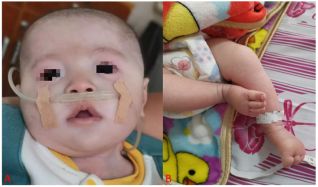
Dysmorphic craniofacial features included a prominent forehead, bitemporal narrowing, microcephaly, short philtrum, downward-slanting palpebral fissures, hypertelorism, a broad nasal tip, a tented upper lip, low-set ears, and an open-mouth posture with tongue protrusion (Figure 1A). Visual tracking was poor.
Neurological examination revealed axial hypotonia with inability to lift or sustain the head, increased tone in the lower limbs, flexed knees with limited extension, and normal deep tendon reflexes (Figure 1B). Right-sided cryptorchidism and a small penis were also present.
Respiratory examination showed intermittent stridor with otherwise normal respiratory rate. Lung auscultation revealed coarse breath sounds without rales. Cardiac examination was normal. The liver was palpable 2.2 cm below the right costal margin; the spleen was not palpable.
Laboratory and Metabolic Evaluation
Routine stool and urine tests, blood gas analysis, liver function tests, thyroid function, vitamin profiles, and tandem mass spectrometry screening for inherited metabolic disorders were generally unremarkable. Additional findings included:
1). reversed urinary serine/threonine ratio
2). mild glycosuria
3). decreased serum zinc and iron levels
4). a developmental assessment general quotient of 33.33, corresponding to approximately a 1-month developmental level
5). bilateral retinitis pigmentosa on fundus examination
Imaging and Electrophysiology
Chest radiography showed mild exudative changes in the left lung.
Echocardiography revealed a patent foramen ovale with mild tricuspid regurgitation.
Auditory brainstem response (ABR) testing showed abnormal wave I differentiation in the right ear, with elevated auditory thresholds (left: 50 dBnHL; right: 60 dBnHL).
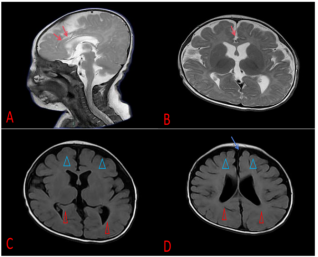
Brain MRI demonstrated hypoplasia of the genu and body of the corpus callosum and mild enlargement of the frontal and temporal extracerebral spaces (Figure 2).
Electroencephalography was normal.
Diagnosis and Hospital Management
Preliminary diagnoses included global developmental delay, auditory impairment, hypertonia, abnormal liver enzymes, and congenital laryngomalacia.
During hospitalization, treatment consisted of nasal cannula oxygen therapy, cefuroxime for pulmonary infection, budesonide nebulization, and infrared chest physiotherapy. Nutritional support, probiotics, zinc and iron supplementation, and early rehabilitation—including massage, visual tracking, prone lifting, and postural control training—were initiated.
Given the multi-system involvement, distinctive craniofacial features, significant developmental delay, ocular and auditory abnormalities, and MRI findings, a neurodevelopmental genetic disorder was suspected. Whole genome sequencing (WGS) of the patient and his parents was performed after informed consent.
Follow-up
After 11 days of hospitalization, the infant was discharged with diagnoses of bronchopneumonia, retinitis pigmentosa, auditory impairment, hypertonia, congenital laryngomalacia, growth retardation, zinc deficiency, iron deficiency, and patent foramen ovale.
Following discharge, he continued home oxygen therapy and systematic rehabilitation including muscle relaxation, tactile grasping training, prone and vertical head lifting exercises, and visual stimulation. Despite continuous intervention, his developmental progress remained limited, and recurrent respiratory infections required repeated hospitalizations.
At the 13-month follow-up, the child was wearing hearing aids, had poor head control, remained unable to sit independently, but responded to sounds with vocalizations and smiling. Long-term prognosis remains under observation. Figure 3 shows the child’s appearance at 13 months.
Genetic Findings
Whole genome sequencing identified a heterozygous frameshift variant in the POGZ gene: c.2699_2700dup (p.Leu901TyrfsTer2). Sanger sequencing confirmed the variant in the patient, while both parents tested negative, indicating a de novo origin (Figure 4).
The variant meets the following ACMG pathogenicity criteria:
1). PVS1 (very strong): null variant consistent with loss-of-function mechanism
2). PS2 (strong): confirmed de novo mutation
3). PM2 (moderate): absent from major genomic and literature databases
4). PP4 (supporting): phenotype highly consistent with White-Sutton syndrome
Accordingly, the variant was classified as pathogenic. Integrating clinical, imaging, ophthalmologic, audiologic, and genetic findings, a definitive diagnosis of White-Sutton syndrome was established.
3. Discussion
Molecular Mechanism and Neurodevelopmental Pathophysiology
White-Sutton syndrome (WSS) is primarily caused by pathogenic variants in POGZ, a gene essential for chromatin remodeling, mitotic progression, and transcriptional regulation. As an HP1α-interacting protein, POGZ plays a central role in maintaining chromatin architecture and regulating gene expression during neurodevelopment . The HPZ domain of POGZ binds HP1α and modulates Aurora B kinase activity, enabling the dissociation of HP1α from chromosomal arms during mitosis and ensuring proper chromatin condensation and segregation . Disruption of this pathway due to loss-of-function variants leads to mitotic arrest, reduced neural progenitor proliferation, and impaired neuronal differentiation . POGZ expression peaks during gestational weeks 8–9 and declines after birth , underscoring its critical role in early cortical development. Deficiency of POGZ can impair midline brain formation, cortical layering, and transcription of synaptic genes. Studies in mouse models carrying a POGZ missense variant (Q1042R) and iPSC-derived neuronal models have demonstrated abnormal POGZ localization, defective neuronal differentiation, reduced dendritic complexity, and ASD-like behaviors . Transcriptomic analyses have also shown dysregulation of the L1CAM pathway in POGZ-deficient cells, and partial rescue of neuronal defects following L1CAM silencing, suggesting a potential mechanism underlying disrupted neural circuit formation . Recent multi-omics studies further demonstrate that POGZ regulates neuronal migration, chromatin accessibility, and synaptic plasticity through multiple transcription factor networks.
Multi-System Involvement and Broader Biological Roles of POGZ
Although neurodevelopmental abnormalities represent the core phenotype of WSS, increasing clinical evidence indicates multi-organ involvement, including craniofacial dysmorphism, skeletal abnormalities, cardiac malformations, hypotonia, gastrointestinal issues, auditory impairment, and ocular pathology. This broad phenotypic spectrum reflects the widespread expression of POGZ in various embryonic tissues such as the heart, liver, kidneys, skeletal muscles, and hematopoietic system. As a chromatin remodeling protein, POGZ contributes to transcriptional stability and cell cycle progression in rapidly proliferating or transcriptionally active cells; therefore, its dysfunction affects multiple developmental pathways. Experimental studies have shown that POGZ interacts with the Wnt/β-catenin and Notch signaling pathways , both of which are essential for organogenesis. Dysregulation of these pathways may explain the systemic clinical findings observed in WSS. Cohort studies involving more than 120 reported cases worldwide reveal substantial phenotypic variability among POGZ mutation carriers, suggesting incomplete penetrance and potential involvement of modifier genes. The estimated prevalence of WSS is less than 1 per 1,000,000, highlighting its rarity. The present case demonstrates neurological, auditory, ocular, and structural brain abnormalities, consistent with previously reported features while expanding the clinical spectrum in the Chinese population.
Comparison With Previously Reported Cases
Most reported WSS cases involve de novo truncating POGZ variants, consistent with the heterozygous frameshift variant identified in our patient (c.2699_2700dup). The child's clinical presentation aligns with the frequently described manifestations in WSS, including global developmental delay, hypotonia, craniofacial dysmorphism, sensory impairments, and corpus callosum hypoplasia. However, features such as congenital laryngomalacia, recurrent respiratory infections, and early-onset retinitis pigmentosa are less commonly documented and may reflect population-specific variation or the influence of additional genetic or environmental modifiers. Recent experimental studies using POGZ mutant mouse models and pluripotent stem-cell systems have provided further support for the multi-system involvement of POGZ -related disorders. Conditional POGZ knockout and dominant-negative POGZ mouse lines recapitulate core neurodevelopmental features and, in severe allelic states, can show congenital heart defects such as ventricular septal defects, which are suspected to contribute to embryonic lethality. Together with human embryonic stem-cell and ESC-derived neural models, which demonstrate impaired neural differentiation and widespread transcriptional dysregulation following POGZ loss of function, these data support a pathogenic mechanism that affects both brain development and other organ systems. .
Clinical Implications, Prognosis, and Therapeutic Perspectives
Currently, there is no targeted pharmacological therapy for WSS. Because POGZ mutations disrupt neural development, synapse formation, and chromatin remodeling, management is primarily symptomatic and supportive. However, growing evidence demonstrates that early, structured, and sustained intervention can significantly improve developmental outcomes. In this case, although speech delay persists, the child showed notable progress in motor and neurological function following comprehensive early rehabilitation. This is consistent with studies indicating that early developmental intervention enhances neuroplasticity in children with chromatin remodeling disorders. Future management should prioritize early audiological assessment to optimize speech and language development, as hearing impairment is common in WSS. A multidisciplinary approach involving neurorehabilitation, speech therapy, psychological support, and genetic counseling is essential for comprehensive care. Precision medicine strategies—such as individualized rehabilitation based on genetic information and exploration of pharmacological-assisted neurorehabilitation—represent emerging management directions. Further research using tissue-specific knockout models and single-cell transcriptomics may clarify the differential roles of POGZ across organ systems and identify potential therapeutic targets.
4. Conclusion
This case report provides a comprehensive characterization of the patient’s multisystem clinical manifestations through detailed clinical assessment, imaging studies, auditory and visual evaluations, and developmental testing, thereby outlining the core features of White-Sutton syndrome (WSS). Most importantly, whole-genome sequencing identified a previously unreported de novo pathogenic frameshift variant in the POGZ gene, c.2699_2700dup (p.Leu901TyrfsTer2). This novel mutation expands the known mutational spectrum of POGZ and further enriches the genotype–phenotype correlation of WSS. The findings highlight the critical role of early genetic testing in children presenting with complex, multisystem developmental abnormalities, as it facilitates timely diagnosis, prognostic evaluation, and individualized rehabilitation planning. Overall, this case contributes valuable clinical and genetic evidence that enhances current understanding of WSS and provides meaningful reference for future research on its molecular mechanisms and precision management.
Acknowledgments
We thank the patient and family who attended this study. Thank all healthcare workers in the Department of Pediatric in the First Affiliated Hospital of Jinan University as well as the reviewers and editors.
Author Contributions
Zhi-Jun Mo: Writing – original draft
Jiang-Mei Zeng: Data curation
Xiang Pan: Data curation
Yuan-Zong Song: Conceptualization, Supervision
Conflicts of Interest
The authors declare no conflicts of interest.
Appendix
Figure 1. Craniofacial deformity characteristics.
The child exhibits a high forehead, bilateral temporal narrowing, microcephaly, a short head, short philtrum, downward slanting palpebral fissures, wide interpupillary distance, flattened nasal bridge, broad nasal tip, tent-shaped upper lip, open mouth with tongue protrusion, and low-set ears (Figure 1A). Increased muscle tone in the lower limbs, with knee flexion and limited extension (Figure 1B).
Figure 2. Brain MRI of the child. The corpus callosum at the genu and body (indicated by red arrows), bilateral frontal lobes (indicated by blue triangles), and temporal lobes show underdevelopment (indicated by red triangles). The corresponding extra-axial spaces are slightly widened (indicated by blue arrows), suggesting possible cerebral dysgenesis.
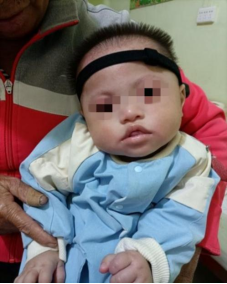
Figure 3. Follow-up at 1 year and 1 month of age. The child is wearing a hearing aid, has weak neck control, cannot sit, responds to calling with vocalizations, and smiles.
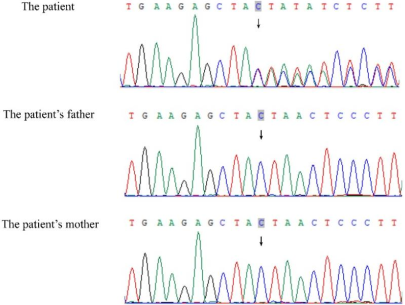
Figure 4. Sanger sequencing of the POGZ gene in a family of three. The child exhibits a heterozygous mutation in the POGZ gene, c.2699_2700dup (p.Leu901TyrfsTer2), which is not present in either of the parents.

References
[1] Batzir, A. N., White, J., & Sutton, V. R. White-Sutton syndrome [J]. GeneReviews®. Seattle: University of Washington, 2024, (00): 1-3.
[2] Batzir, A. N., Posey, J. E., Song, X., et al. Phenotypic expansion of POGZ-related intellectual disability syndrome (White-Sutton syndrome) [J]. American Journal of Medical Genetics Part A, 2020, 182(1): 38-52.
[3] Murch, O., Jain, V., Benneche, A., et al. Further delineation of the clinical spectrum of White-Sutton syndrome: 12 new individuals and a review of the literature [J]. European Journal of Human Genetics, 2022, 30(1): 95-100.
[4] Nagy, D., Verheyen, S., Wigby, K. M., et al. Genotype-phenotype comparison in POGZ-related neurodevelopmental disorders by using clinical scoring [J]. Genes (Basel), 2022, 13(1): 154.
[5] Bartholomeeusen, K., Christ, F., Hendrix, J., et al. Lens epithelium-derived growth factor/p75 interacts with the transposase-derived DDE domain of POGZ [J]. Journal of Biological Chemistry, 2009, 284(17): 11467–11477.
[6] Dentici, M. L., Niceta, M., Pantaleoni, F., et al. Expanding the phenotypic spectrum of truncating POGZ mutations: Association with CNS malformations, skeletal abnormalities, and distinctive facial dysmorphism [J]. American Journal of Medical Genetics Part A, 2017, 173(7): 1965–1969.
[7] White, J., Beck, C. R., Harel, T., et al. POGZ truncating alleles cause syndromic intellectual disability [J]. Genome Medicine, 2016, 8(1): 3.
[8] Wang, T., Guo, H., Xiong, B., et al. De novo genic mutations among a Chinese autism spectrum disorder cohort [J]. Nature Communications, 2016, 7: 13316.
[9] Heath, J., Cheyou, E. S., Findlay, S., et al. POGZ promotes homology-directed DNA repair in an HP1-dependent manner [J]. EMBO Reports, 2022, 23(1): e51041.
[10] Metcalf, C., Waller, D. P., Nie, Y., et al. Genotype–Phenotype Comparison in POGZ-Related Neurodevelopmental Disorders. Genes. 2022, 13(1), 154.
[11] White, S. M., Todd, E. J., Mahmood, S., et al. Further Delineation of the Clinical Spectrum of White–Sutton Syndrome: 12 New Individuals and a Review of the Literature. European Journal of Human Genetics. 2021, 29(10), 1517–1527.
[12] Hamada, N., Nishijo, T., Iwamoto, I., et al. Analyses of conditional knockout mice for POGZ, a gene responsible for neurodevelopmental disorders in excitatory and inhibitory neurons in the brain [J]. Cells, 2024, 13(6): 540.
[13] Deng, L., Mojica-Perez, S. P., Azaria, R. D., et al. Loss of POGZ alters neural differentiation of human embryonic stem cells [J]. Molecular and Cellular Neuroscience, 2022, 120: 103727.
[14] Mudassir, B. U., Mudassir, M., Williams, J. B., & Agha, Z. Denovo variants in POGZ and YY1 genes: The novel mega players for neurodevelopmental syndromes in two unrelated consanguineous families [J]. PLoS One, 2025, 20(1): e0315597. Published 2025 Jan 8.
[15] Leibovitch, L., Gorenshtein, A., Bibi, E., & Uri, A. Malignant catatonia in an adolescent with pogo transposable element derived with zinc finger domain (POGZ) gene mutation: case report [J]. BJPsych Open, 2025, 11(5): e170. Published 2025 Aug 1.
[16] Ferretti, A., Barresi, S., Trivisano, M., et al. POGZ-related epilepsy: Case report and review of the literature [J]. American Journal of Medical Genetics Part A, 2019, 179(8): 1631-1636.
[17] Giraldo-Ocampo, S., Pacheco-Orozco, R. A., Pachajoa, H. A Novel POGZ Variant in a Patient with Intellectual Disability and Obesity [J]. Applied Clinical Genetics. 2022, 15: 63-68. Published 2022 Jul 6.
[18] Caffarelli, C., Santamaria, F., Piro, E., et al. New insights in pediatrics in 2021: choices in allergy and immunology, critical care, endocrinology, gastroenterology, genetics, haematology, infectious diseases, neonatology, neurology, nutrition, palliative care, respiratory tract illnesses and telemedicine [J]. Italian Journal of Pediatrics, 2022, 48(1): 189. Published 2022 Nov 26.
[19] Bar, O., Ebenau, L., Weiner, K., Mintz, M., & Boles, R. G. Whole exome/genome sequencing in cyclic vomiting syndrome reveals multiple candidate genes, suggesting a model of elevated intracellular cations and mitochondrial dysfunction [J]. Frontiers in Neurology. 2023 May 5; 14: 1151835.
Cite This Article
  • APA Style

    Mo, Z., Zeng, J., Pan, X., Song, Y. (2025). Clinical and Genetic Analysis of a Chinese Patient Carrying a Novel POGZ Variant Associated with White-Sutton Syndrome. Clinical Medicine Research, 14(6), 223-228. https://doi.org/10.11648/j.cmr.20251406.13

    Copy | Download

    ACS Style

    Mo, Z.; Zeng, J.; Pan, X.; Song, Y. Clinical and Genetic Analysis of a Chinese Patient Carrying a Novel POGZ Variant Associated with White-Sutton Syndrome. Clin. Med. Res. 2025, 14(6), 223-228. doi: 10.11648/j.cmr.20251406.13

    Copy | Download

    AMA Style

    Mo Z, Zeng J, Pan X, Song Y. Clinical and Genetic Analysis of a Chinese Patient Carrying a Novel POGZ Variant Associated with White-Sutton Syndrome. Clin Med Res. 2025;14(6):223-228. doi: 10.11648/j.cmr.20251406.13

    Copy | Download

  • @article{10.11648/j.cmr.20251406.13,
      author = {Zhi-Jun Mo and Jiang-Mei Zeng and Xiang Pan and Yuan-Zong Song},
      title = {Clinical and Genetic Analysis of a Chinese Patient Carrying a Novel POGZ Variant Associated with White-Sutton Syndrome},
      journal = {Clinical Medicine Research},
      volume = {14},
      number = {6},
      pages = {223-228},
      doi = {10.11648/j.cmr.20251406.13},
      url = {https://doi.org/10.11648/j.cmr.20251406.13},
      eprint = {https://article.sciencepublishinggroup.com/pdf/10.11648.j.cmr.20251406.13},
      abstract = {Background: White-Sutton Syndrome (WSS) is a rare autosomal dominant neurodevelopmental disorder caused by pathogenic variants in the POGZ gene, which is essential for chromatin remodeling and neuronal development. Because of its broad phenotypic heterogeneity and lack of disease-specific features, early diagnosis and management remain challenging. Timely genetic testing can significantly aid in early diagnosis and intervention, improving patient outcomes. Objective: To describe the clinical and genetic findings of a Chinese pediatric patient with a novel POGZ mutation, summarize the diagnostic approach, and underscore the importance of early genetic testing and multidisciplinary management for the diagnosis and management of WSS. Method: A 4-month-old male infant presented with developmental delay and abnormal liver function. Comprehensive clinical, imaging, auditory, and ophthalmologic evaluations were performed. Whole-genome sequencing and Sanger validation were conducted, followed by multidisciplinary management including nutritional therapy and early rehabilitation. Result: The patient exhibited microcephaly, hypotonia, distinctive facial dysmorphism, auditory impairment, and retinitis pigmentosa. Brain MRI revealed hypoplasia of the corpus callosum. A novel heterozygous frameshift mutation c.2699_2700dup (p.Leu901TyrfsTer2) in POGZ was identified and classified as pathogenic according to ACMG criteria (PVS1 + PS2 + PM2 + PP4). The variant was not reported in existing genetic databases, representing a novel pathogenic mutation expanding the POGZ mutational spectrum. Despite multidisciplinary rehabilitation, neurodevelopmental progress remained limited. Conclusion: This report documents the first Chinese case of White-Sutton Syndrome caused by a novel POGZ frameshift mutation, emphasizing the importance of early genetic testing for accurate diagnosis and timely intervention. Genetic diagnosis combined with personalized rehabilitation may improve long-term neurodevelopmental outcomes for patients with WSS. This case study expands the mutation spectrum of the POGZ gene and provides valuable reference for the diagnosis, treatment, prognosis assessment, and genetic counseling of WSS patients.},
     year = {2025}
    }
    

    Copy | Download

  • TY  - JOUR
    T1  - Clinical and Genetic Analysis of a Chinese Patient Carrying a Novel POGZ Variant Associated with White-Sutton Syndrome
    AU  - Zhi-Jun Mo
    AU  - Jiang-Mei Zeng
    AU  - Xiang Pan
    AU  - Yuan-Zong Song
    Y1  - 2025/12/17
    PY  - 2025
    N1  - https://doi.org/10.11648/j.cmr.20251406.13
    DO  - 10.11648/j.cmr.20251406.13
    T2  - Clinical Medicine Research
    JF  - Clinical Medicine Research
    JO  - Clinical Medicine Research
    SP  - 223
    EP  - 228
    PB  - Science Publishing Group
    SN  - 2326-9057
    UR  - https://doi.org/10.11648/j.cmr.20251406.13
    AB  - Background: White-Sutton Syndrome (WSS) is a rare autosomal dominant neurodevelopmental disorder caused by pathogenic variants in the POGZ gene, which is essential for chromatin remodeling and neuronal development. Because of its broad phenotypic heterogeneity and lack of disease-specific features, early diagnosis and management remain challenging. Timely genetic testing can significantly aid in early diagnosis and intervention, improving patient outcomes. Objective: To describe the clinical and genetic findings of a Chinese pediatric patient with a novel POGZ mutation, summarize the diagnostic approach, and underscore the importance of early genetic testing and multidisciplinary management for the diagnosis and management of WSS. Method: A 4-month-old male infant presented with developmental delay and abnormal liver function. Comprehensive clinical, imaging, auditory, and ophthalmologic evaluations were performed. Whole-genome sequencing and Sanger validation were conducted, followed by multidisciplinary management including nutritional therapy and early rehabilitation. Result: The patient exhibited microcephaly, hypotonia, distinctive facial dysmorphism, auditory impairment, and retinitis pigmentosa. Brain MRI revealed hypoplasia of the corpus callosum. A novel heterozygous frameshift mutation c.2699_2700dup (p.Leu901TyrfsTer2) in POGZ was identified and classified as pathogenic according to ACMG criteria (PVS1 + PS2 + PM2 + PP4). The variant was not reported in existing genetic databases, representing a novel pathogenic mutation expanding the POGZ mutational spectrum. Despite multidisciplinary rehabilitation, neurodevelopmental progress remained limited. Conclusion: This report documents the first Chinese case of White-Sutton Syndrome caused by a novel POGZ frameshift mutation, emphasizing the importance of early genetic testing for accurate diagnosis and timely intervention. Genetic diagnosis combined with personalized rehabilitation may improve long-term neurodevelopmental outcomes for patients with WSS. This case study expands the mutation spectrum of the POGZ gene and provides valuable reference for the diagnosis, treatment, prognosis assessment, and genetic counseling of WSS patients.
    VL  - 14
    IS  - 6
    ER  - 

    Copy | Download

Author Information